Mathematics

Where mathematics meets visual art.

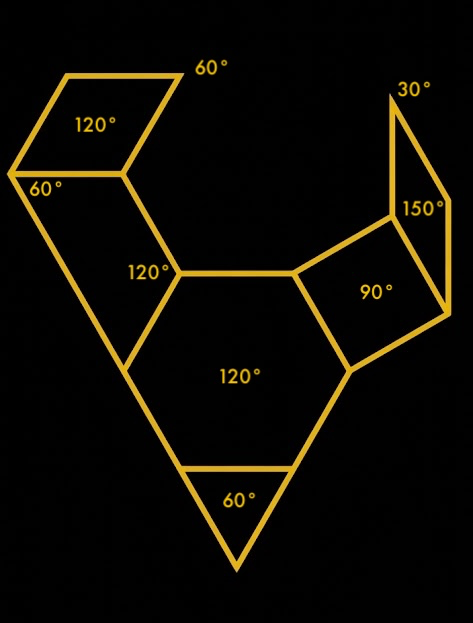
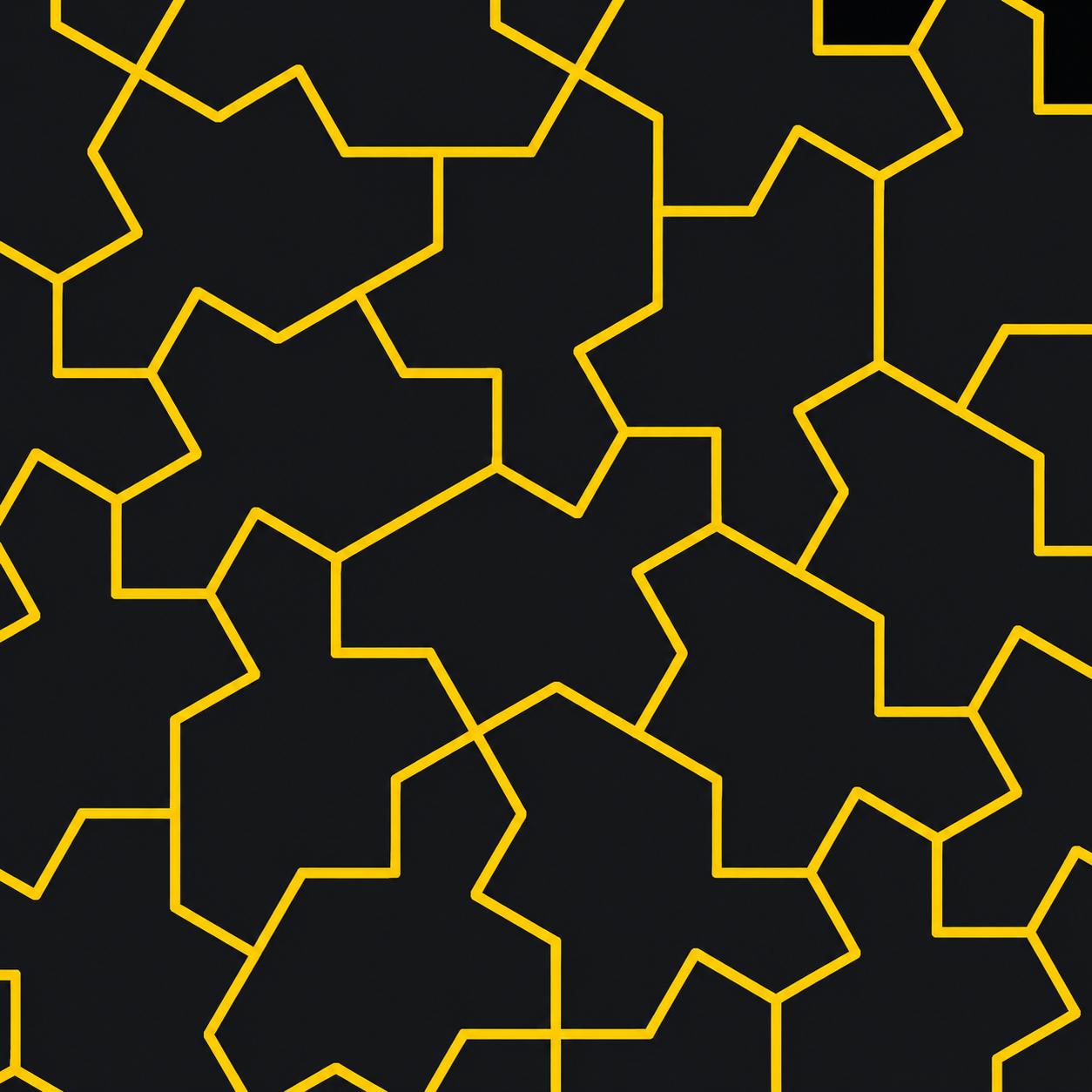
Geometric systems are powerful because simple rules can generate entire worlds of structure and variation. This balance between constraint and freedom has shaped mosaics, facades, textiles, and digital design—where repetition, symmetry, and aperiodic order become a language of form.

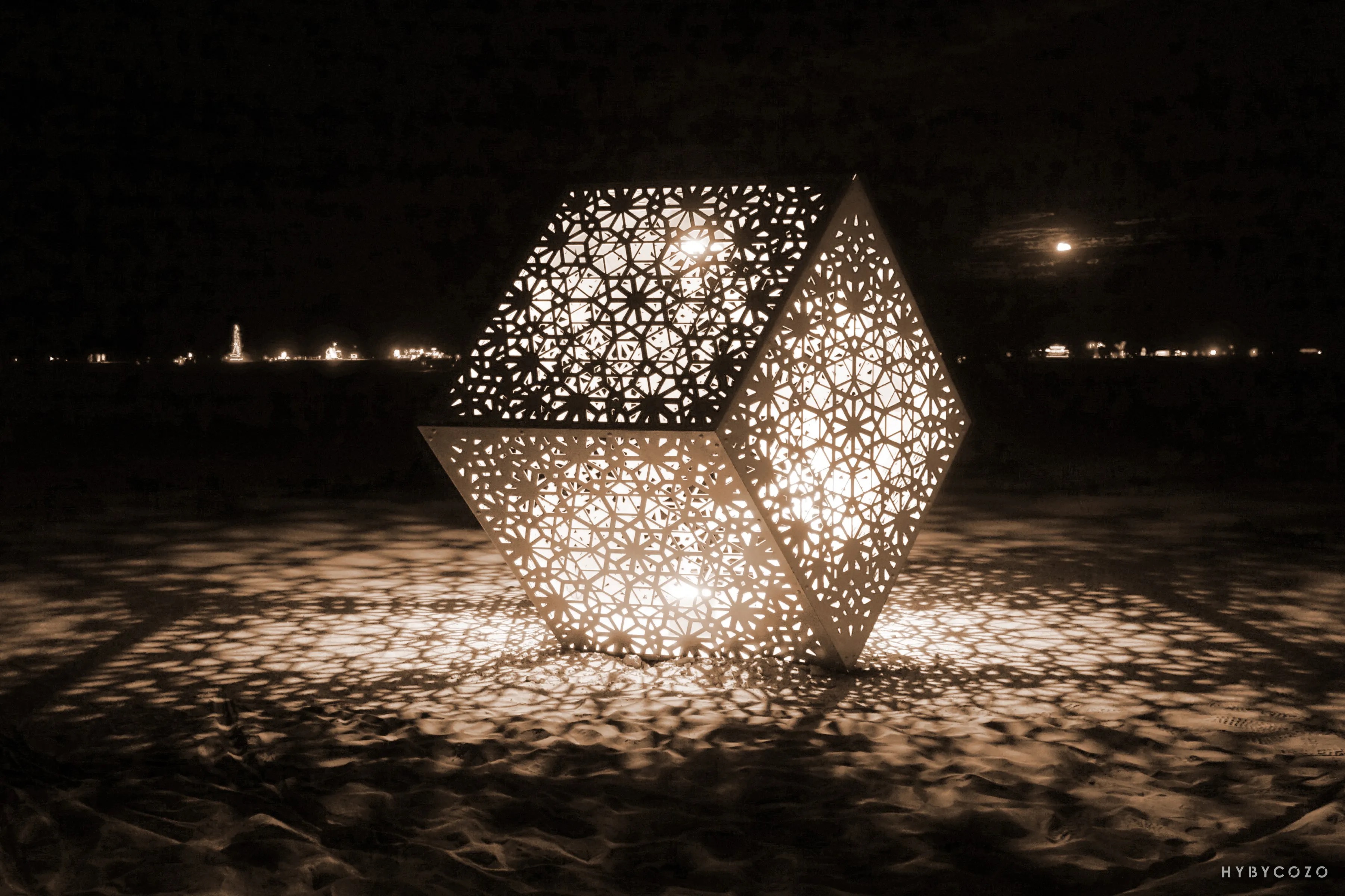
Geometry in the built world: light, structure, and repetition.

Underlying Geometry

Mathematics and art share a common language: structure.

The most resonant visual systems often begin with a few simple rules. Geometry gives form, proportion creates harmony, and repetition sets rhythm. From those constraints, patterns emerge that feel both precise and unexpected.

This page traces the mathematical structures behind Phi & Form’s apps - the angles, symmetries, matching rules, and tiling systems that define each visual world.

Ways of Reading a Pattern

Three ways to read the system

  • The small set of shapes behind it
  • The balance between repetition and variation
  • The way local rules create global form

Rhombus

Back to top ↑

What it is

A rhombus is a quadrilateral (four-sided polygon) with all four sides equal, so it is an equilateral parallelogram. It is often described as a tilted square or a diamond shape. Key properties include:

  • Opposite angles are equal.
  • Opposite sides are parallel.
  • The diagonals bisect each other at right angles.

The Rhombi Tiles app explores how a small set of angles can tile a surface, creating patterns that repeat, reflect, and rotate with clear visual rhythm.

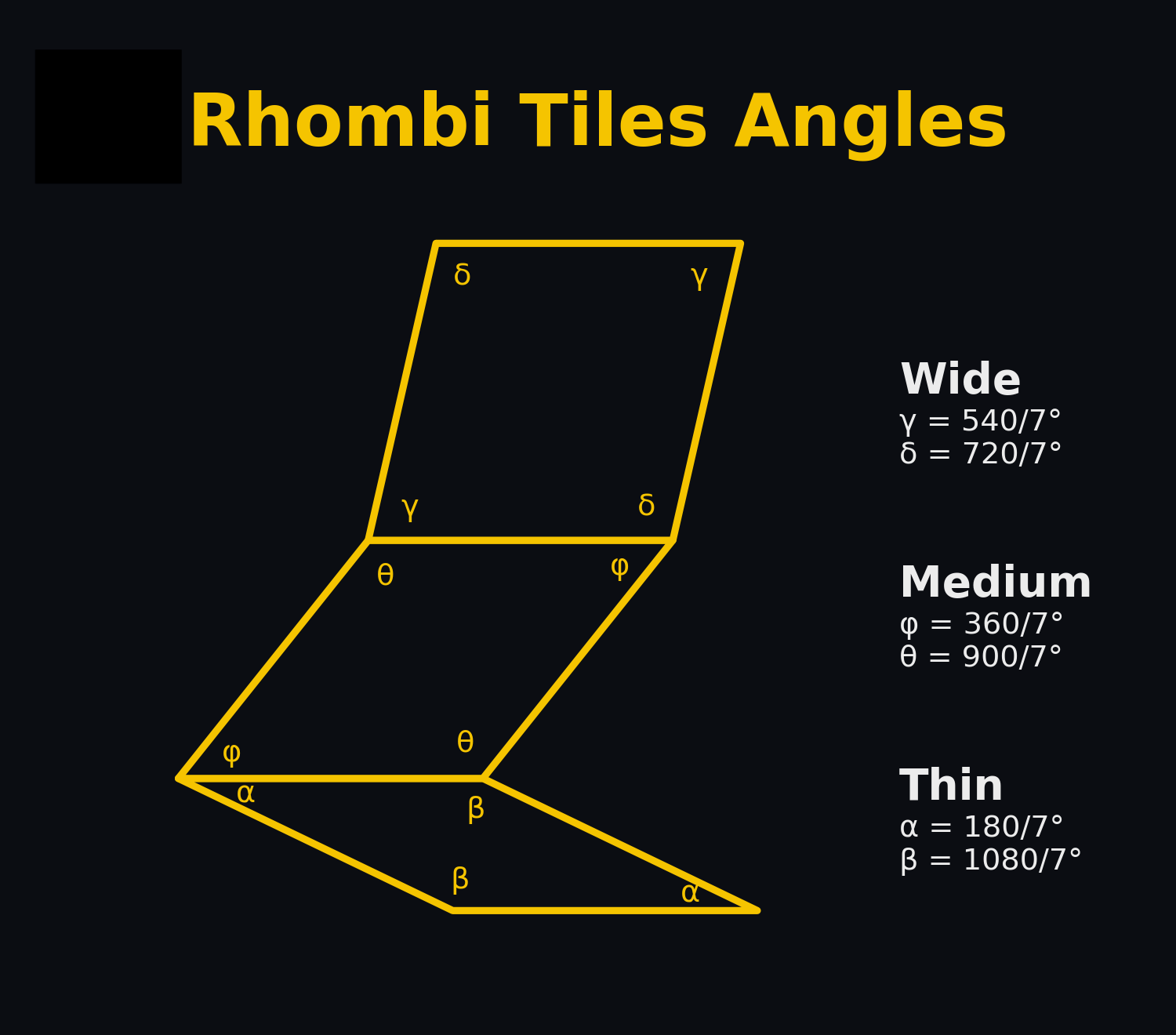
In the app, all three rhombus tile types are built on the same base angle step: 180/7° (about 25.714°). Each tile angle is an integer multiple of that step (1×, 2×, 3×, and their complements):

  • Thin: acute 180/7°, obtuse 1080/7°
  • Medium: acute 360/7°, obtuse 900/7°
  • Wide: acute 540/7°, obtuse 720/7°

So if you rotate tiles in increments of 180/7°, their edges and corners stay on the same 7-fold angular grid and align/snap correctly.

Visual guide

Penrose

Back to top ↑

What it is

A Penrose tiling is a family of aperiodic tilings defined by strict local matching rules. Penrose systems are not always made from rhombi; some use kite-and-dart tiles.

The Penrose Tiles app uses the rhombus version, commonly called P3. It is built from two equal-edge rhombi - a thin rhombus and a thick rhombus - together with edge-matching rules that enforce non-periodic order.

These rhombi are closely related to two complementary golden-triangle forms:

  • golden triangle: 36°, 72°, 72°
  • golden gnomon: 36°, 36°, 108°

A golden triangle is an isosceles triangle in which the ratio of an equal side to the base is the golden ratio, φ ≈ 1.618.

A golden gnomon is the complementary isosceles triangle with angles 36°, 36°, 108°.

Across history, golden-ratio triangles have also been used in design and architecture to express proportion and visual harmony.

This shared geometry is what gives the tiling its distinctive fivefold structure.

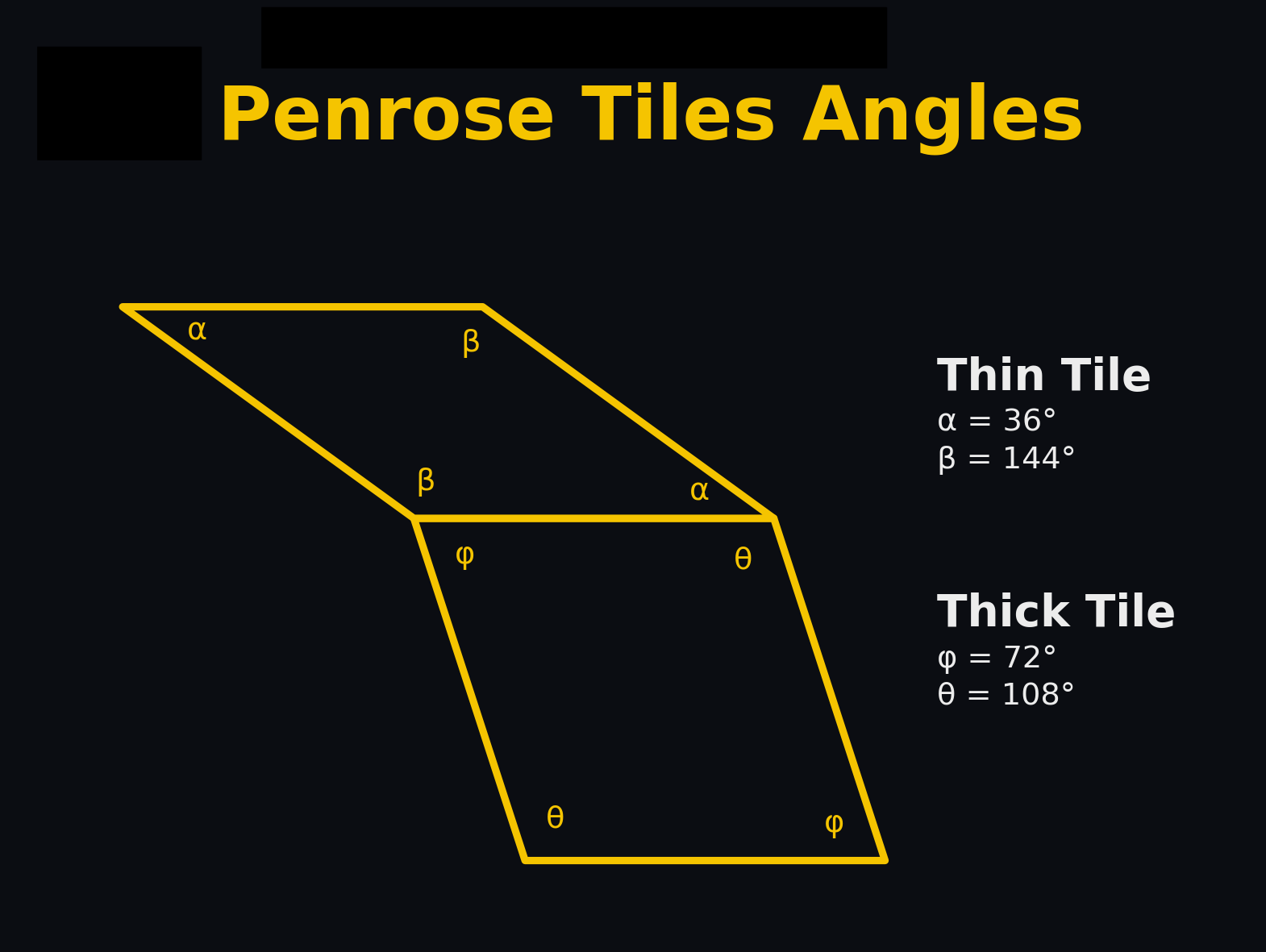
In the app, both Penrose rhombus types are built on the same base angle step: 180/5° = 36°. Each tile angle is an integer multiple of that step (1x, 2x, and their complements):

  • Thin: acute 36°, obtuse 144°
  • Thick: acute 72°, obtuse 108°

So if you rotate tiles in increments of 36°, their edges and corners stay on the same 5-fold angular grid and align/snap correctly.

Visual guide